How to Install a Fire Extinguisher Bracket Without Drilling
F4Fabrications manufactures custom vehicle fire extinguisher brackets that secure directly to the factory passenger seat rails. This non-invasive installation method eliminates the need for permanent interior drilling. Drivers can mount safety hardware in modern vehicles (daily drivers, track cars, exotic vehicles) while preserving the original floorpan structure.
Why is seat rail mounting the best no-drill installation method?
Mounting a fire extinguisher bracket to the factory seat track hardware provides a 25g-rated securement point without damaging the vehicle interior. High-tensile factory seat bolts secure the metal bracket to the chassis, preventing the extinguisher cylinder from becoming a dangerous projectile during an impact. This method avoids drilling through the floorboard, protecting underlying vehicle components (wiring harnesses, fuel lines, battery packs).
What hardware is required for motorsport safety compliance?
To comply with motorsport safety regulations and ensure maximum security, the installation must utilize specific mounting hardware. Rubber or plastic fasteners are strictly prohibited; drivers upgrading from these inferior components can utilize a metal custom fire extinguisher holder to maintain compliance. Drivers must secure the fire extinguisher cylinder using a minimum of two screw-locked metal straps that are included.
Customers utilizing “Fire stick” type suppressants rather than traditional cylinders can secure their devices using fire safety stick clips.
What hand tools are required for a seat rail bracket installation?
The installation process requires specific hand tools to remove the factory seat hardware safely. Installers need a socket wrench set (typically 14mm or Torx T50 sockets), a standard spanner set (12mm), and a plastic trim removal tool to access the seat rail bolts.
How do you install the fire extinguisher bracket onto the seat rails?
Installing an under-seat fire extinguisher bracket requires users to utilize the front seat mounting points. Follow these precise steps to complete the installation:
Attach the fire extinguisher holder (cradle) to the metal seat rail bracket using the supplied bolts before beginning the in-car installation.
Adjust the passenger seat to the rear-most position on the rails using the manual lever or electric seat controls to expose the front mounting bolts.
Remove the front seat bolts connecting the seat rails to the vehicle chassis using the appropriate socket wrench.
Lift the front of the seat frame upwards gently to create a physical gap between the seat rail and the vehicle floor.
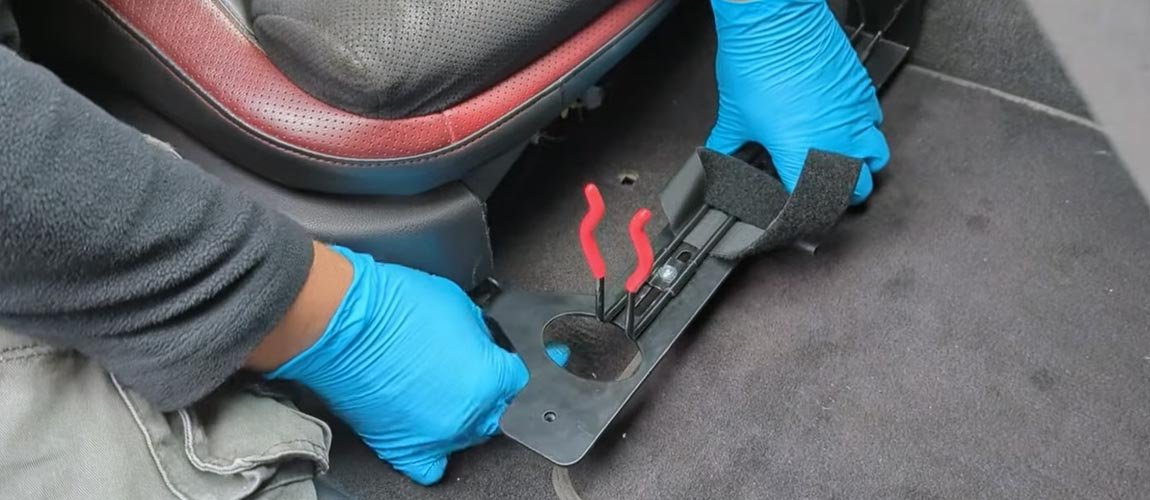
Slide the steel bracket (with the cradle already attached) underneath the seat rails. Utilize the bracket’s slotted holes and adjustable spacer bars to adapt the width perfectly to your specific seat rail dimensions.
Insert the high-tensile factory bolts back through the seat rail and the fire extinguisher bracket.
Tighten each bolt gradually to the manufacturer-specified torque value (e.g., 33.5 Nm for specific models) to ensure absolute structural rigidity.
Place the fire extinguisher cylinder into the metal cradles of the bracket.
Will a seat rail fire extinguisher mount restrict electric or mechanical seat movement?
Mounting a fire extinguisher bracket to the factory seat bolts does not permanently disable electric seat motors or manual sliding mechanisms. However, the metal bracket may limit the furthest forward seat motion on specific vehicle models. Manual seats require physical clearance for the driver’s hand to operate the mechanical adjustment lever located under the front cushion. Drivers installing larger capacity cylinders who require extra distance from the seat controls can install an additional plate for fire extinguisher clearance. Installers must verify the extinguisher cylinder has adequate clearance from moving components (seat adjustment handles, wiring harnesses, electric motors) before finalizing the installation.